
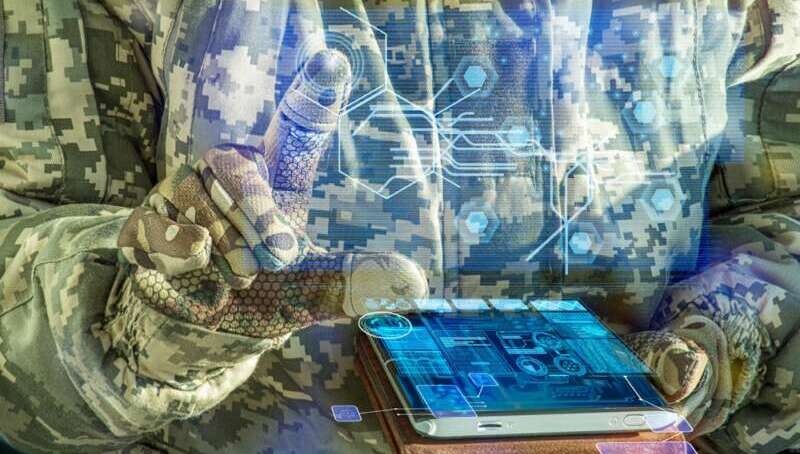
U.S. Special Operations Forces (SOF) are recalibrating from two decades of counterterrorism toward great power competition, and they’re doing it at a tempo that demands faster decisions, smarter logistics, and a more holistic approach to human performance.
The Data, Analytics, and AI Adoption Strategy for the Department of Defense (DOD) – rebranded as the War Department by the Trump administration – prioritizes moving high-quality data and artificial intelligence (AI) closer to operators so commanders can act faster to gain decision advantage. The strategy directs decentralized, mission-aligned AI adoption across the enterprise. In addition, the U.S. Special Operations Command (USSOCOM) modernization blueprint, “SOF Renaissance,” doubles down on people and technology, calling for accelerated innovation to “build an enduring advantage.”
A new discussion with General Dynamics Information Technology (GDIT) leaders captured the shift toward great power competition and how data, AI, edge computing, and military health initiatives are coming together to keep SOF prepared for today’s environment, equipped with actionable insights, and ready for the next mission.
On the ground, decision advantage increasingly depends on AI at the tactical edge. Recent advances in cloud, storage, and compute power are enabling AI for faster decision-making in the field, noted Joe McMahon, senior director for mission software at GDIT.
“These are our elite fighting forces, and they need to be on the cutting edge in order to conduct operations in the global environment that we’re living in,” McMahon said.
Reimagining Logistics for Contested Environments
Keeping SOF forces supplied, maintained, and positioned is increasingly complex as adversaries contest logistics in every domain. DOD officials have warned that future missions will span vast distances while enduring cyber and other disruptions, thus demanding new approaches to sustainment. A recent MeriTalk series on SOF and contested logistics details the inflection point: The shift to near-peer competition requires reimagined, data-driven supply chains that can adapt under attack.
GDIT’s McMahon tied those imperatives directly to operations, noting two readiness pillars: intelligence preparation – “pull[ing] data together from multiple sources” in consumable ways – and logistics, ensuring “the right equipment and the right people at the right location,” supported by predictive analytics and maintenance.
Advancing Warfighter Brain Health and Total Performance
Military readiness is not only about gear and tech; it also hinges on human performance. USSOCOM has made “People” its number one priority, underscoring that “humans are more important than hardware” and that the people are the reason they “win”. Betsy Myhre, program director for federal health at GDIT, said SOF performance requires “a holistic view of the operator, integrating the physical, psychological, cognitive, family and social, and the spiritual domains … building resilience, adaptability, and human performance across all of these areas.”
That holistic framing echoes the DOD’s Warfighter Brain Health (WBH) Strategy and Action Plan – five lines of effort to optimize brain health from training through recovery – as well as the Defense Health Agency (DHA) 2024 WBH Research Strategy. Together, they move traumatic brain injury (TBI) research and clinical practice toward prevention, earlier diagnosis, and better outcomes tied to readiness. Myhre, who supports the DHA TBI Center of Excellence, also described field-level research with SOF units, from blast exposure studies and en-route care to early concussion diagnostics and performance nutrition, that translates results into clinical guidelines and tools for military providers.
Building and Retaining Mission-Ready Teams
Delivering mission-enabling technology and solutions also requires specialized talent. “It’s about bringing the right team to the mission,” Myhre said – from recruiting and credentialing to training and, crucially, retaining clinicians and specialists who help to optimize individual performance. That people-first priority tracks with USSOCOM leadership’s public guidance this spring at SOF Week 2025, emphasizing higher standards, faster technology adoption, and sustained investment in the force.
Accelerating Capability Investments
Beyond strategy, recent moves signal new USSOCOM investments in advanced technologies. In June, GDIT announced a foundational IT enterprise contract award to support USSOCOM components. Its work will leverage AI, cloud, and cybersecurity solutions to enhance operational effectiveness and connectivity for elite units. USSOCOM also amended a broad agency announcement in late July to add advanced AI and autonomy capabilities to its “wish list,” highlighting continued demand for machine-assisted sensing, decision support, and teaming at the tactical edge.
Driving Speed and Adaptability Across the Force
Across SOF operations and healthcare, speed and adaptability are critical. The SOF readiness cycle – train or deploy, return to garrison, re-baseline, and re-equip for the next mission – is now infused with new surveillance, measurement, and testing techniques to shorten recovery and elevate performance, Myhre observed. Meanwhile, McMahon pointed to the “technology threat” and the rapid acceleration of AI and software observed in recent conflicts, noting GDIT’s forward-leaning research via its Emerge labs to keep SOF on the cutting edge.
To learn more, view the discussion and gain additional insights.