
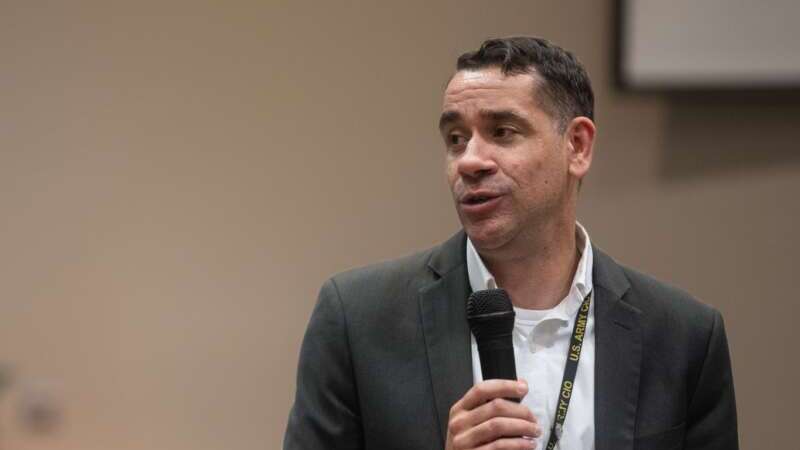
Over the past year, the Department of Defense has undergone a wave of changes aimed at better meeting operational needs. For one senior leader within the U.S. Army, that mandate means adopting a “reimagination” mindset.
Under the Trump administration, the Pentagon has been rebranded as the Department of War.
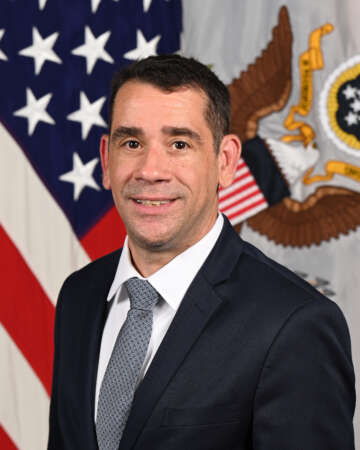
In an interview with MeriTalk, the Army’s Chief Information Officer (CIO) Leonel Garciga said reimagining how the Army conducts its mission goes beyond adopting new technology. It requires changing processes that enable a workforce capable of using tools to deliver outcomes at scale.
Garciga explained that the aim is to “try to refocus everybody on reimagining the way we do things.” To date, he said this mindset has been helpful in accelerating transformation efforts, “especially on the business system side of the house.”
Reimagining cybersecurity processes to deliver operational defense
One area Garciga highlighted was the force’s shift in cybersecurity policy.
“We’ve been slowly trickling out a lot of policy which starts redefining [our] approach to cybersecurity, from what was a traditional compliance approach to more of an operational approach,” Garciga said, a shift that emphasizes analyzing real-time threat data across the network and enabling faster decisions.
Garciga said his office plans to work closely with the Army Cyber Command to rethink how network defense is organized across echelons. The effort includes clearer guidance on how cyber personnel across the force contribute to network defense and how their capabilities can be maximized.
A major focus is ensuring the Army can organize its cyber workforce in ways that support operational missions. Part of that includes shifting cyber responsibilities closer to commanders.
“We wanted to push that work down to commanders so they could focus on their specific cyber terrain, treating it as a domain, opposed to treating it as an extra thing that we need to layer bureaucracy on,” Garciga said.
He said the Army has begun laying the operational and policy foundations needed to scale that model across the force.
Scaling AI across the force
As the Pentagon works to become an AI-first force – following direction from Secretary of War Pete Hegseth – the Army is translating that mandate into experimentation across the force.
“Our mantra has been, ‘give commanders a lot of decision space here, be AI first, and let folks run and learn,” Garciga said, an effort which began nearly a year ago.
After continued experimentation, Garciga said he began to see patterns in how personnel use these tools – such as administrative tasks – which then feed into the AI capabilities his team delivers.
“We’ve seen commonly asked questions and commonly asked prompts, which have started to change our thoughts to focus on where we have commonality and agents that we can build,” Garciga said, sharing that one common prompt was generating a standard Army memo.
“We actually have an agent that does that now,” he added.
Looking ahead, Garciga said the Army also plans to build what he describes as a “model garden” to manage and scale different AI models across the force.
“[We’re focused on building] a model garden where we can manage some of these models for more warfighting intensive capabilities, versus where we’ve been focused at, which is the enterprise,” Garciga said.
The concept mirrors the standardized foundation the Army created for cloud environments.
“There’ll be some announcements coming out on this soon,” he said.
Building a mission-focused cloud and SaaS foundation
Cloud modernization remains a major focus for the Army. Garciga says the strategy has evolved from simply moving systems into the cloud to determining which capabilities best support operational missions.
Key to that effort has been standardizing the Army’s foundational cloud environments across major providers, including Amazon Web Services, Microsoft, Oracle, and Google. That standardization allows both program managers and industry partners to deploy capabilities in a consistent environment while reducing the amount of infrastructure and cybersecurity work individual programs must manage.
At the same time, the Army has adopted a “SaaS-first” strategy, prioritizing Software as a Service (SaaS) solutions whenever possible, reducing the service’s “organic workload and providing clear service-level agreements with industry partners to help oversee capabilities.”
This shift also prompted a rethink of how software is delivered.
“Our move to SaaS-first, business system conversions, and the integration and implementation of large language models in the environment made us realize we had to rethink our approach to delivery,” Garciga said. “It became more about identifying our enterprise platforms, figuring out how to manage them at scale, and opening up those capabilities.”
That momentum has led to collaboration between Garciga’s team and the Capability Program Executive Enterprise Group to form a low-code, no-code center of excellence.
“The goal is not only to mature these platforms at the enterprise level, but also to bring together government talent that can rapidly build solutions on them for the entire Army,” Garciga said. “Over the next six months, we’ll be focused on formalizing that effort across the force.”
Finding time for music off the clock
Every once in a while, residents in Northern Virginia might see Garciga in a different role –not discussing efforts to reimagine how the Army meets its operational needs but playing music on stage.
An interest that began at age 10 has grown into an extensive guitar collection and several appearances on stage at wineries across Northern Virginia.
“I call it time to chill and reflect. I spend quite a bit of time playing. I’m pretty religious about it. I play probably about an hour a day, more on the weekends, and I’m always looking for an opportunity to get on stage,” he said.