
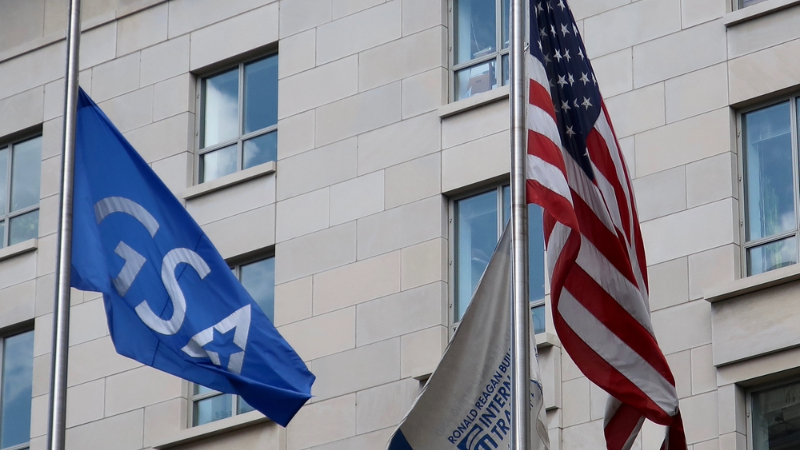
General Services Administration (GSA) leaders said Wednesday that the agency’s OneGov program has generated $800 million in governmentwide savings so far, signaling that larger returns may follow as the program expands.
Larry Allen, acting assistant commissioner in GSA’s Office of Information Technology Category, and Kyra Stewart, acting director of GSA’s IT Vendor Management Office, said the savings have come largely through cost avoidance under the OneGov program.
GSA launched OneGov in April 2025 to modernize and streamline federal IT acquisitions through standardized terms and pricing.
“There are 20 active deals now in different spaces, from cyber to workplace productivity, AI [artificial intelligence], lots of opportunities, and we’re talking with agencies about what the needs are. So, they are starting to drive the offers that you see, because we want to meet the need. We are not driving demand; we’re reflecting it,” Stewart said during an Alliance for Digital Innovation event.
Allen said GSA is using those early results to push OneGov toward a more mature enterprise-style acquisition model. That approach, he said, includes onboarding original equipment manufacturers (OEMs) to the Multiple Award Schedule, aggregating agency demand, and using early savings to demonstrate the value of consolidated purchasing to industry, agencies, and taxpayers.
“Adoption ultimately follows value. So, we have to succeed in these initial steps in order to create that value,” Allen said.
While OneGov has been marketed to reduce costs for agencies and benefit OEMs, Allen also assured industry members that GSA is envisioning a new role for traditional resellers and integrators – not pushing them out.
Allen pointed to a recent Centers for Medicare and Medicaid Services OneGov cloud deal in which Amazon Web Services took responsibility for pricing and platform delivery, while General Dynamics Information Technology remained involved on integration, implementation, and mission support.
“It was not a displacement of the integrator; it was a realignment of the integrator,” Allen said.
Stewart said GSA is still working through the roles that resellers and integrators will play in the longer-term OneGov model, but stressed that the broader partner ecosystem will remain important.
“OneGov really aims to shift to the direct OEM relationship, not remove the broader ecosystem,” Stewart explained. “So, resellers, integrators, [and] other partners in the network are still essential. We have integration needs. We have training needs. We have processing of personnel, change management, and other mission– tailored necessities that we want the agencies to have access to.”
She added that GSA is in conversation with OEMs about reshaping channel relationships, including through subcontracting and contractor team arrangements, as part of a broader shift intended to better match agency requirements and deliver stronger value.
GSA has announced nearly two dozen OneGov deals. Those deals have included Cohesity, Oracle, Google, Adobe, Salesforce, DocuSign, OpenAI, Anthropic, Microsoft, ServiceNow, Meta, xAI, and Palo Alto Networks, among others.