
A new bill introduced by Rep. Nikki Budzinski, D-Ill., would require the Department of Veterans Affairs (VA) to make measurable improvements to its Electronic Health Record Modernization (EHRM) program or ditch the contract with Oracle Cerner altogether.
The bill comes as the VA is scheduled to resume deployments of the EHRM program next month, beginning with four sites in Michigan.
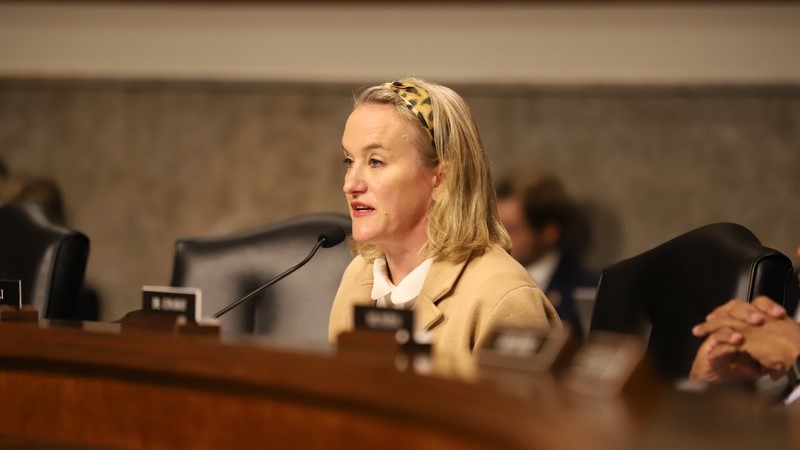
Speaking during a legislative meeting of the House Committee on Veterans’ Affairs last Wednesday, Budzinski said the bill would establish new metrics for VA’s EHRM program. If the VA fails to meet certain benchmarks within two years, the legislation would restrict the agency from extending its contract with Oracle Cerner.
Additionally, within one year of completing baseline requirements, the VA would need to submit a report to Congress with at least “two alternative strategies” to the EHRM program, according to the bill’s text.
Those alternative options must include a schedule for the implementation of a commercial EHR system – something the EHRM program still lacks – and a preliminary lifecycle cost estimate.
“It has been almost eight years since the first Trump administration imposed this $10 billion sole-source contract on the department. In that time, VA has only managed to deploy the system at six hospitals,” Budzinski said. “The program has been plagued by delays, patient safety concerns, and dramatic impacts on veterans’ access to care, among other issues.”
“It’s time that we establish guardrails and expectations for the department and on this program itself,” she added.
Budzinski said her bill would require the department to “create a baseline of clinical and business workflows as well as technical requirements to ensure the standardization of VA practices and systems.”
The lawmaker said the legislation would also require the VA to establish quality metrics for the EHRM program based on the VA’s Strategic Analytics for Improvement and Learning Value Model.
“It also improves public and congressional reporting and requires the VA create a plan for sunsetting EHRM, if necessary,” she said.
Notably, the bill would require the VA to perform an independent verification and validation (IV&V) test of all major IT projects and systems, including the EHRM. The IV&V report would need to be made available to the VA committees in the House and Senate.
The VA has spent over two years in “reset” mode for its EHRM program. As part of the program reset, the VA and contractor Oracle Health – formerly Oracle Cerner – paused all deployments to address user concerns.
Thus far, the VA has deployed the new EHR system to six out of the 164 VA medical centers. The VA plans to deploy the system to 13 sites in 2026, beginning next month, but the agency has not yet released a schedule for the remaining 145 sites.
However, the VA has expressed confidence that this time around, deployments will be different.
“This time, everyone is dialed in, and it is influencing how we drive our deployments,” VA Deputy Secretary Paul Lawrence, who oversees the EHRM program, wrote in a March 17 blog post.
“The bottom line is that, this time, the Federal EHR is working, stable and reliable,” he said, adding, “Join us and have confidence in the 13 sites going live in 2026.”