

Budget Experts Question Trump’s $1.5T DOD Budget Plan
President Donald Trump’s call for a $1.5 trillion defense budget for fiscal year (FY) 2027 drew sharp reactions, as fiscal watchdogs warned of major debt impacts while Republican leaders praised the proposal as necessary to counter global threats.
Trump said last week that his administration would seek $1.5 trillion in military spending for FY 2027 – a record level and hundreds of billions of dollars above recent annual defense budgets.
In a post on Truth Social, Trump cited global security concerns and said the higher funding level would allow the U.S. to build what he described as a “Dream Military” and keep the country safe.
“Our military budget for the year 2027 should not be $1 trillion, but rather $1.5 trillion. This will allow us to build the ‘Dream Military’ that we have long been entitled to and, more importantly, that will keep us safe and secure, regardless of foe,” the post read.
The administration has not formally submitted a Pentagon budget request for FY 2027. Congress has not yet passed full-year defense appropriations for FY 2026.
The Committee for a Responsible Federal Budget, a nonpartisan nonprofit, said the proposed increase would have significant long-term fiscal consequences.
The group estimated that a $1.5 trillion defense budget beginning in fiscal 2027 would raise defense spending by about $5 trillion through 2035 and add $5.8 trillion to the national debt, including interest.
The proposed increase would represent a sharp rise in Pentagon spending, raising questions about how the increase would be financed. Trump has said tariff revenue could help fund higher military spending, along with rebate payments and deficit reduction, but the committee said available estimates do not support that claim.
“Policymakers should not rely on existing tariff revenue … and even if they did it would fall far short of covering the costs of such a large defense spending increase,” the committee said.
The Congressional Budget Office projected that current tariffs would raise about $2.5 trillion in additional revenue through 2035, or roughly $3 trillion including interest. But “on a dynamic basis, the revenue is likely to be somewhat smaller,” the report said.
Trump also acknowledged that without tariff revenue, military spending in 2027 should be limited to $1 trillion.
Republican leadership, however, has voiced support for Trump’s $1.5 trillion budget plan.
In a joint statement, Republican leaders on the Senate and House Armed Services committees welcomed Trump’s proposal, calling it a “necessary investment to rebuild the military and address threats from China, Russia, Iran and narco-terrorism,” according to the statement posted to X.
“President Trump’s decisive commitment reverses years of neglect. He is replacing rhetoric with investment and sending a message to our adversaries,” the statement read.
In a separate statement on X, Sen. Roger Wicker, R-Miss., called Trump’s FY 2027 proposal the “largest peacetime military buildup in decades.”
Despite praise from Republican leadership, the committee claimed that “given the $175 billion appropriated to the defense budget under the One Big Beautiful Bill Act, there is little case for a near-term increase in military spending.”
However, Wicker has previously argued that the FY 2026 requested amount was insufficient and did not align with the president’s vision for military spending, claiming that it relies on reconciliation funds intended for long-term use, rather than requesting what he described as real growth in the base defense budget.
The Pentagon’s FY 2026 proposal seeks about $848.3 billion in discretionary base funding, with total national defense spending reaching roughly $1.01 trillion when supplemental and mandatory funds are included.
[…]
Witnesses representing industry, policy, and labor groups urged lawmakers Tuesday to strengthen and better coordinate U.S. digital trade policy, warning that shortcomings in patent law, trade rules, and worker protections could weaken American innovation and competitiveness. […]
President Donald Trump renominated Sean Plankey to be the director of the Cybersecurity and Infrastructure Security Agency (CISA) on Tuesday, after Plankey failed to receive Senate confirmation by the end of 2025. […]

A new Senate bill would direct the U.S. Small Business Administration to provide a range of help to small businesses that are looking to implement artificial intelligence (AI) technologies. […]

Calls to create a stand-alone U.S. cyber force gained momentum Tuesday as industry experts warned Congress that America’s cyber deterrence has eroded, leaving adversaries free to penetrate networks and critical infrastructure with little fear of consequences. […]

Months after ending its Direct File pilot, the Internal Revenue Service (IRS) is moving to refresh the technology used by its volunteer tax preparation programs, issuing a draft solicitation for a new long-term software contract. […]
Under a newly proposed rule, the Office of Personnel Management (OPM) would take over authority to decide appeals by probationary federal employees who allege unfair termination, stripping that power from an independent hiring agency. […]

The General Services Administration (GSA) announced this week the full implementation of Transactional Data Reporting (TDR), a move aimed at increasing transparency into what the federal government buys and how much it pays for goods and services. […]

Cameron Stanley will serve as the Pentagon’s next chief digital and artificial intelligence officer (CDAO), Defense Secretary Pete Hegseth announced on Jan. 12 during an address at SpaceX headquarters in Starbase, Texas. […]
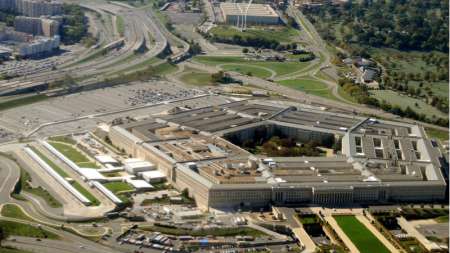
Defense Secretary Pete Hegseth issued a memo this week unveiling a new artificial intelligence (AI) strategy to expand the military’s use of AI across operations, intelligence, and enterprise functions. […]

Secretary of Defense Pete Hegseth and Director of National Intelligence Tulsi Gabbard have tapped Timothy Kosiba as the National Security Agency’s (NSA) 21st deputy director. […]
Shila Cooch has departed as the acting chief information security officer (CISO) at the Department of Energy (DOE) to serve in a new position at the Federal Emergency Management Agency (FEMA). […]

The Trump administration is withdrawing the United States from its longstanding participation in the Global Forum on Cyber Expertise (GFCE). […]

The U.S. Space Force’s Space Systems Command (SSC) awarded nine National Security Space Launch Phase 3 Lane 1 launches aimed at improving missile warning and missile tracking capabilities. […]
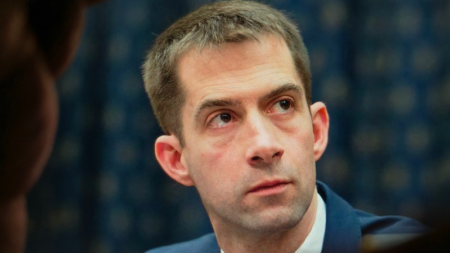
A new bill from Sen. Tom Cotton, R-Ark., would let artificial intelligence (AI) data center companies bypass federal electricity regulations by building their own independent energy infrastructure. […]
The United States expanded its Pax Silica economic security initiative with the addition of Qatar, as U.S. officials continue to signal broader growth of the partnership aimed at artificial intelligence (AI) and supply chain security. […]

The Office of Personnel Management (OPM) on Jan. 8 launched the Federal Workforce Data (FWD) website, a new platform aimed at expanding public access to federal workforce data and improving transparency around hiring, attrition, and workplace trends. […]

The Environmental Protection Agency (EPA) and the State Department are preparing the workforce for artificial intelligence (AI) before scaling the technology as agencies align behind the White House’s AI Action Plan, top officials said Friday. […]

A senior official with the National Telecommunications and Information Administration (NTIA) said the agency expects to announce new funding opportunities under its Broadband Equity, Access, and Deployment (BEAD) program. […]

The Department of the Air Force (DAF) announced Thursday that it created seven new acquisition organizations as part of broader Pentagon procurement reforms directed by Defense Secretary Pete Hegseth. […]

The Pentagon lacks complete and reliable data on which civilian employees are eligible for telework or remote work, limiting its ability to track and oversee those arrangements, according to a Government Accountability Office (GAO) report. […]

A bipartisan group of senators is taking another stab at the National Quantum Initiative Reauthorization under a new version of the legislation introduced Thursday. […]

Fresh off a $145 million push to expand federal registered apprenticeships and close skills gaps, the U.S. Department of Labor (DoL) chief innovation officer has a message for young workers: embrace artificial intelligence (AI). […]
The Office of Personnel Management (OPM) is doubling down on its return-to-work order, offering few exemptions from in-person directives, according to updated guidance. […]

The Cybersecurity Infrastructure and Security Agency (CISA) announced Thursday that it has retired 10 emergency directives (ED) issued in the last six years, saying that the directives have been successfully addressed. […]

Federal agencies should prioritize interoperable platforms, strong governance, and more disciplined use of data as they modernize systems with artificial intelligence (AI), according to a senior federal AI expert during a recent GovCIO webinar. […]
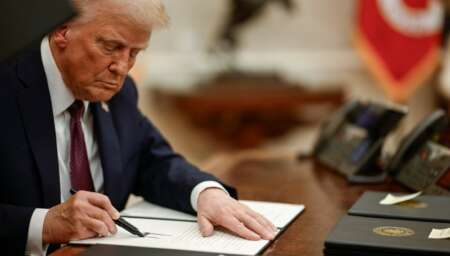
President Donald Trump signed an executive order Wednesday imposing new restrictions on major defense contractors, accusing parts of the defense industrial base of prioritizing shareholder returns over timely production for the military. […]

The Federal Communications Commission (FCC) announced this week that it is looking for a new organization to serve as the lead administrator for its U.S. Cyber Trust Mark Program. […]

The Federal Risk and Authorization Management Program (FedRAMP) has made it mandatory for every FedRAMP-authorized cloud service provider (CSP) to maintain a working “FedRAMP Security Inbox” – a dedicated email address designed to ensure CSPs receive and quickly respond to urgent governmentwide cybersecurity communications. […]

General Dynamics Information Technology (GDIT) has been awarded a $131 million task order under the U.S. Air Force’s Base Infrastructure Modernization contract, which totals $8.75 billion and aims to create a unified and secure network environment across all Air Force and U.S. Space Force bases around the world. […]